A quarterly celebration of the accomplishments and progress driven by the dedicated team members across UCLA Administration. United by a commitment to excellence, these departments deliver outstanding services, products and programs that support UCLA’s mission of education, research and public service—while creating exceptional experiences for the entire Bruin community.
Strengthening our core
As we continue to navigate a time of change—both within our institution and across the higher education landscape—I want to take a moment to share some important updates.
With the arrival of our new chancellor and recent shifts in federal education policy, we’ve taken a fresh look at our Campus Strategic Plan, particularly Goal 5. This goal focuses on how we operate —through our people, our finances and our technology. To stay effective and sustainable, we’re shifting our focus back to the basics: strengthening our core operations in human resources, finance and technology.
These areas are essential to supporting every part of our campus community. Right now, our decentralized structure—where each department manages its own systems and processes—creates duplication, higher costs and inconsistent service experiences.
To address this, we are looking to expand shared services. This looks to centralize common services so they can be delivered more efficiently and consistently across campus so that we’re working smarter together.
What this means for UCLA is better support with standardized processes with more reliable and consistent service for everyone. It also paves the way for smarter use of talent by consolidating routine tasks, freeing up time and energy for staff to focus on what they do best. Shared services can help us reduce duplication and make better use of our limited resources—something that’s especially important given our financial challenges.
We’ve already seen success with this approach with individual IT units joining forces as part of the new Digital & Technology Solutions (DTS), as well as with the HRPOC shared services model. We are now exploring how we can expand these models and expand them to include certain financial functions. These changes won’t happen overnight. We are taking a thoughtful, phased approach—testing, learning and adjusting as we go with an eye to building a stronger, more stable foundation that supports UCLA—now and into the future.
Thank you for everything you do to support our campus community. Your work matters, and we’re excited to move forward together.
Sincerely,
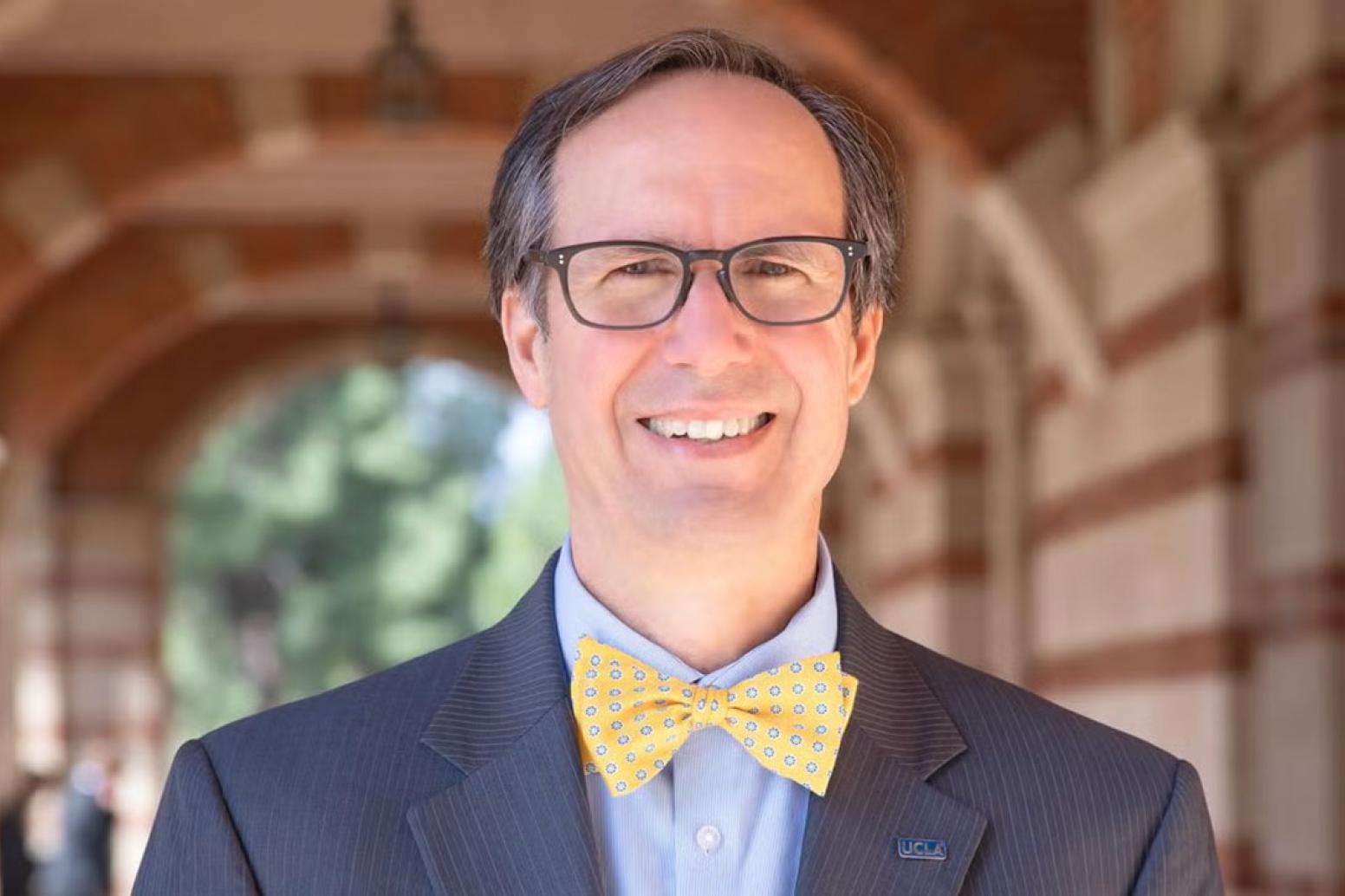
Michael J. Beck
Administrative Vice Chancellor
UCLA readying for 2028 Games
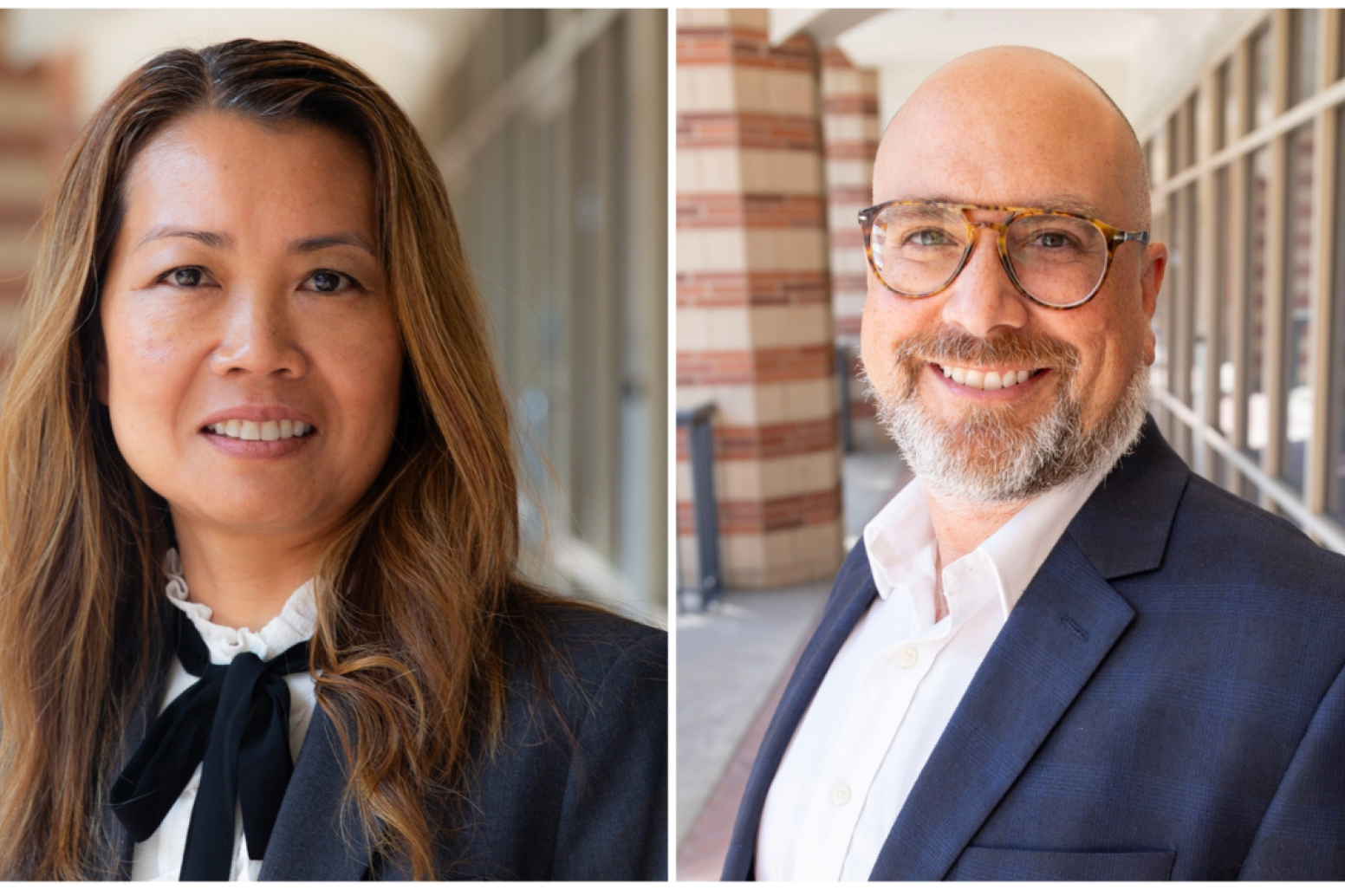
Effective July 1, Chansoth Hill will transition from her role as director of the UCLA Events Office to serve full-time as senior director of the Olympic and Paralympic Village. In this fixed-term position, which runs through the end of 2028, she will lead university-wide coordination efforts, overseeing 12 sub-committees and reporting directly to Administrative Vice Chancellor Michael Beck. A key focus will be ensuring UCLA meets its commitments for the Village while minimizing disruptions to campus operations.
With Hill stepping into this new role, Bill Sweeney, assistant director of the Events Office, has been named acting director for the same duration. Sweeney, who has worked alongside Hill for more than 20 years, brings extensive experience to the position. He will lead a team of nine full-time staff responsible for scheduling and coordinating more than 700 events, film shoots and extracurricular activities annually. He will also join the Events & Transportation senior management team.
DTS debuts
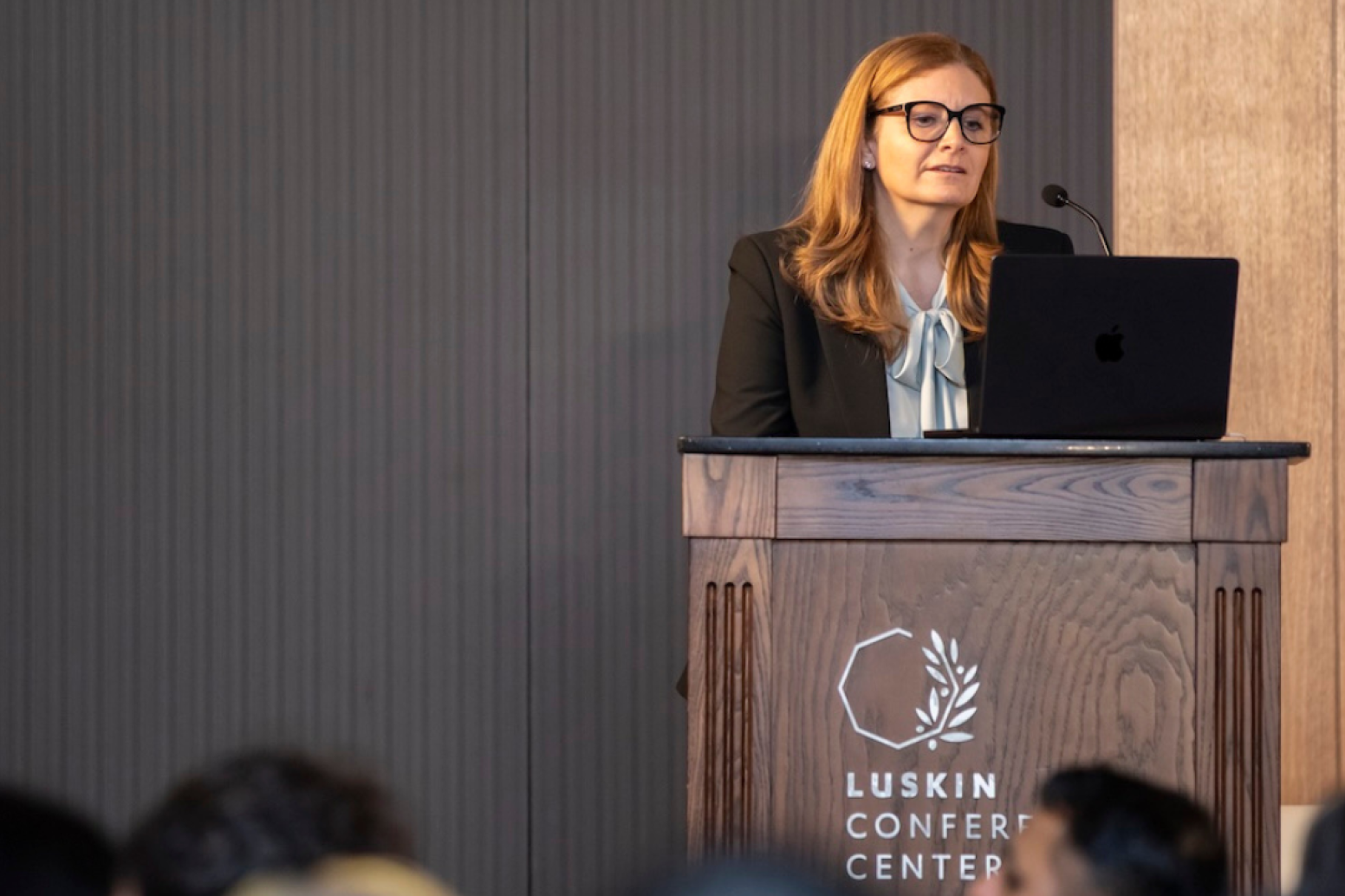
Just days ahead of her five-year UCLA work anniversary, Lucy Avetisyan was center stage in front of an audience of more than 400 people at the UCLA Meyer and Renee Luskin Conference Center. It was a moment she had envisioned and tirelessly worked toward since starting her role as associate vice chancellor for information technology services (ITS) and chief information officer (CIO).
“I want to officially welcome you to Day One, the start of something bold, exciting and deeply meaningful for all of us,” said Avetisyan at the April 23 all-staff event that brought members of UCLA’s central IT organization together for a day of celebration, learning and networking.
“Today isn’t just about gathering in a new space. It’s about stepping fully into a new identity. As of today, we are no longer IT Services. We are UCLA Digital and Technology Solutions. We’ve grown from being service providers to being strategic partners. From fixing what’s broken to building what’s possible.”
“The launch of DTS is a first-of-its-kind undertaking among the 10 University of California campuses, involving numerous stakeholders from UCLA and support from the UC Office of the President,” said Avetisyan, who received the 2022 CIO Award from the Tambellini Group and a 2022 EdScoop 50 Award from the Scoop News Group for her broader contributions to the field.
In addition to strengthening the foundation of campus technology and advancing UCLA’s five-year strategic plan. the establishment of DTS will also help reduce operational complexity, strengthen collaboration and empower innovation with technology, she said.
“We are embracing a bold new vision where technology is no longer just a support system,” said Darnell Hunt, UCLA executive vice chancellor and provost. “IT is a strategic driver of our mission. It powers how we teach. It fuels how we conduct our research. And it shapes how we serve communities — here in Los Angeles and around the world.”
In 2020, Avetisyan became UCLA’s associate vice chancellor for ITS and CIO, with a mandate to develop a digital campus roadmap by identifying IT service gaps that hinder performance, limit service excellence and slow UCLA’s digital progress compared to its peers. Following the announcement of the organizational transformation, hiring for the new DTS department occurred in waves over the past 18 months, with the most recent team members coming on board in March 2025.
“We understood from the gaps that a new structure and operating model would be required,” said Jennifer Ferry, associate chief information officer for strategy, planning and operations, adding that the division was not something that could organically transition over time. “It required a complete departmental redesign to meet the demands of UCLA’s evolving technology landscape and align with the university’s broader goals.”
Using the knowledge and insight gained and communicating their findings to 250 stakeholders across campus in nearly 30 sessions, Avetisyan and her team got to work on making data-driven decisions to remedy decades of IT underinvestment, untapped innovation and unrealized savings.
“By modernizing systems and simplifying operations, technology becomes seamless, allowing Bruins to explore new ideas, expand solutions and drive meaningful change,” said Avetisyan. “Technology should empower people, not stand in their way. This shift ensures that UCLA is equipped with the right digital solutions for today while building a strong foundation for the future.”
For students and faculty, this means secure and accessible digital experiences that continue to support engaging teaching, learning and collaboration. Staff and faculty will see improved tools, products and workflows that will make it easier to work efficiently and stay connected. In addition, they will experience a more strategic approach to collaboration, ensuring technology solutions align with and accelerate UCLA’s broader goals, said Veronica Garcia, deputy chief information officer.
“When systems work better, people can focus on what really matters — exploration, discovery and progress,” Garcia said.
As part of building its senior leadership team, DTS welcomed the University of California’s first chief data and AI officer, Chris Mattmann, and introduced generative artificial intelligence technologies to the campus, including ChatGPT Enterprise, M365 CoPilot and Google’s GeminiChat for use by the campus community.
According to Garcia, the benefits of creating and launching DTS have been vast and impactful. The team leveraged its talent during the recent Los Angeles wildfires to establish a real-time UCLA evacuee dashboard mapping campus databases with CalFire evacuation data to identify staff, faculty and students who were impacted by evacuations. This information was then used to generate unit-specific information for senior leadership to provide targeted outreach and support to affected individuals.
“Our role is to ensure that as UCLA’s digital environment grows, security remains a constant foundation,” said Drake Chang, UCLA’s chief information security officer. “By protecting both individual and institutional data, we’re enabling Bruins to innovate, collaborate and thrive with confidence."
Building on that commitment, DTS has modernized more than 200 critical applications, led cloud migrations that increased agility, and streamlined IT services, reducing redundancy and improving experiences for students, faculty and staff. The team has also reimagined UCLA’s digital workplace — introducing new collaboration platforms, automating complex workflows and enhancing cybersecurity protocols to protect UCLA’s data and mission, all while supporting more than 65,000 users across campus — at scale, in real-time and under increasing demand.
“As UCLA’s technology needs to grow over time, Bruins will have greater access to intuitive, secure digital tools that support everything from classroom experiences to administrative workflows,” said Avetisyan. “To meet these needs, DTS is committed to driving a new era of innovation, modernizing systems, strengthening digital infrastructure and harnessing the power of data and AI to fuel UCLA’s continuous ascent, spark new possibilities and help shape the future of our university.”
Course empowers change
Organizational Effectiveness and Development (OED) has officially launched its Lean Six Sigma Yellow Belt course—a cornerstone of UCLA’s Continuous Process Improvement (CPI) program. Designed for staff and faculty, the course equips participants with practical tools to improve efficiency, reduce waste, and strengthen decision-making across the university.

Aligned with Strategic Plan Goal 5: Become a More Effective Institution, this initiative supports UCLA’s broader commitment to innovation, operational excellence and a culture of continuous improvement.
Why Lean Six Sigma?
As a top research institution, UCLA runs many complex operations. While much functions well, there’s always room to streamline processes, modernize systems and optimize resources. Lean Six Sigma offers a structured, proven approach to identifying inefficiencies and implementing sustainable, data-driven solutions across all areas of campus.
A Hands-On, Interactive Experience
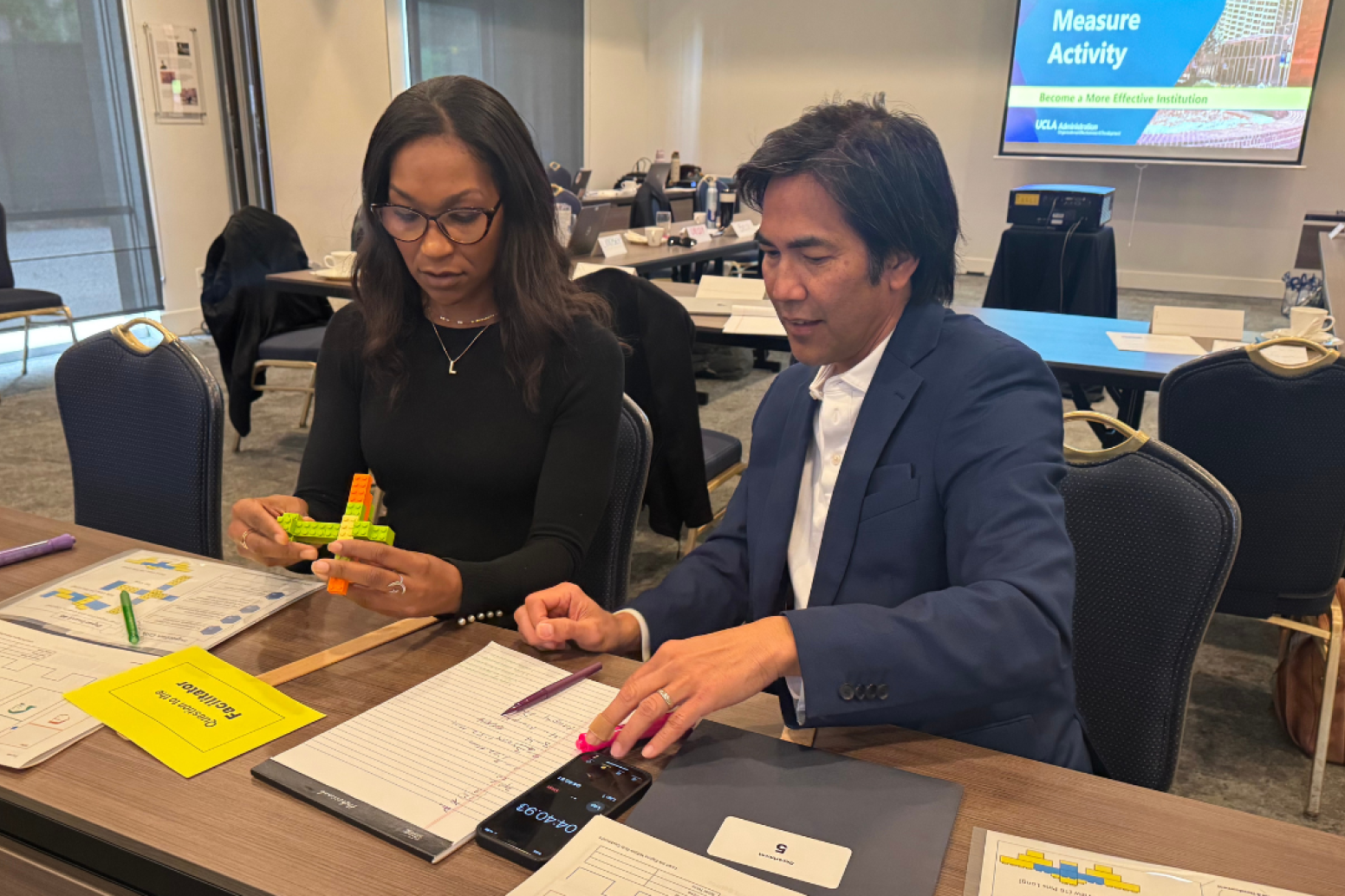
This is not your typical training. The Yellow Belt course is highly interactive and application-focused. Participants engage in a full-day, in-person simulation—or two four-hour virtual sessions—where they apply the DMAIC methodology (Define, Measure, Analyze, Improve, Control) to a real-world-inspired process. This immersive experience allows participants to see improvements in action and understand the real impact of process changes.
To date, more than 100 UCLA faculty and staff have completed the course. The response has been overwhelmingly positive, with participants energized to bring Lean thinking into their roles and units.
Course Benefits
Participants gain a strong foundation in Lean Six Sigma concepts and walk away with actionable skills to:
- Identify and address inefficiencies in day-to-day work
- Reduce operational waste and improve outcomes
- Lead or support change initiatives within their departments
- Contribute meaningfully to institutional goals—regardless of role or title
Who Should Participate?
The Yellow Belt course is open to all UCLA staff and faculty who want to improve how work gets done. Whether you're in administration, research support, student services, finance, or facilities, this training offers tools and techniques you can apply right away.
Get the Most Out of It
To enhance the learning experience, participants are encouraged to complete LinkedIn Learning modules on Lean Six Sigma fundamentals before attending. These self-paced lessons provide helpful context and ensure participants are ready to engage deeply with the course content.
For more information, email uclaoed@oed.ucla.edu.
Mental Health Matters
**This article was originally published in the most recent Administration Equity Council newsletter.
Mental health resources in the workplace are crucial for fostering an inclusive and equitable environment. They ensure that all employees, regardless of their background, have access to the support they need to maintain their well-being and productivity.
According to the California Health Care Foundation, about 1 in 7 adults in California live with a mental illness, and 1 in 26 experience a serious mental illness that significantly impacts their daily lives. These numbers highlight how common mental health challenges are—and yet many people still hesitate to seek help, often believing their struggles aren’t “serious enough.”
But mental health exists on a spectrum, and reaching out early can prevent issues from becoming more severe. Support is available, and you don’t need to wait for a crisis to take advantage of it. Prioritizing your mental well-being is just as important as caring for your physical health.
Here at UCLA, the UCLA Staff & Faculty Counseling Center (SFCC) provides short-term individual counseling and crisis intervention for UCLA employees and leaders, including consultation for supervisors supporting their teams. Employees can schedule appointments with licensed counselors to address personal and work-related challenges. The SFCC is available to adult immediate family members as well. Trainings and in-services are also provided on topics such as stress management, resilience, and emotional well-being. All services are voluntary, confidential, and free. Bilingual counselors (Spanish and Mandarin) are available. To schedule an appointment or for additional questions, please call the SFCC at (310) 794-0245 Monday-Friday 8am-5pm.
UCLA employees enrolled in UC-sponsored medical insurance plans also have access to comprehensive behavioral health benefits. These include coverage for mental health services such as therapy, counseling, and psychiatric care, often with both in-person and virtual options available. Whether you're dealing with stress, anxiety, depression, or other mental health concerns, support is available through your health plan. These services are part of your overall benefits package and are designed to ensure that you and your family have access to the care you need—without needing to navigate additional enrollment steps.
Other campus resources include the UCLA Mindfulness Education Center and the Mindful Awareness Research Center, which both offer classes and workshops for the public. In addition, the Healthy Campus Initiative Center at UCLA provides resources and holds events throughout the year to promote health and well-being at UCLA. The center is also comprised of a series of thematic working groups, including MindWell, which fosters wellbeing, resilience and creative achievement throughout the UCLA community.
It’s important to remember that mental health challenges don’t have to reach a crisis point before you seek help. Whether you're feeling overwhelmed, anxious, down or just not quite yourself, talking to a mental health professional can provide clarity, tools and relief. Reaching out is a sign of strength—not weakness—and taking that first step can lead to meaningful improvements in your well-being. Resources are available, and they’re here for you, no matter the size of the issue.
Rising Star Samantha Hamman
Five outstanding UCLA employees were recently honored by the UCLA Administrative Management Group at its annual Excellence Awards ceremony. Among them was Samantha Hamman, senior project manager lead in UCLA Digital and Technology Solutions, who received the Rising Star Award.

Hamman was honored for consistently delivering transformative solutions, modeling inclusive and empowering leadership, and exemplifying the potential of UCLA’s next generation of leaders. Nominators also noted she demonstrates extraordinary leadership promise through her track record of high-impact project delivery, cross-campus engagement and unwavering commitment to continuous growth.
In addition to being a standout participant in the UCLA Leadership 20XX program, Hamman brings insight, humility and initiative to every session and professional encounter and her contributions to some of UCLA’s most complex, high-profile programs have been nothing short of remarkable, said nominators.
Among her accomplishments, Hamman played a pivotal role in the Bruin Connect & Secure initiative—UCLA’s security transformation and network unification effort—where she led planning and execution to deploy the Trellix endpoint protection solution to all university-owned devices. Concurrently, she was instrumental in standing up the Tiger Team charged with centralizing UCLA’s technical asset inventory—both critical components of UCOP’s 2025 systemwide security mandate. In addition, she has served as a core leader in the FACET program, UCLA’s modernization of its financial aid system. Hamman’s leadership helped drive the successful delivery of key milestones, directly supporting timely and equitable financial aid distribution for tens of thousands of students, including UCLA’s incoming class of 2029.
In addition to Hamman, Scott Carter, deputy director/director of planning and strategic initiatives, Enrollment Management, received the Distinguished Career Award. The Excellence in Leadership (EXCEL) Award went to Jenny L. Lee, student affairs officer, neuroscience department, for the Neuroscience Interdepartmental Program. In addition, Bruin Beacon Awards were presented to Tara Brown, senior business continuity planner, Insurance and Risk Management and Idriss Njike, executive director of Residential Life.
Building culture of respect, awareness, accountability
With the increased use—and occasional misuse—of personal scooters on the UCLA campus, UCLA Transportation and the UCLA Office of Campus and Community Safety have launched a new, hard-hitting ad campaign across campus. Highlighting the potential consequences of irresponsible riding, both for individuals and the wider UCLA community, the campaign aims to build a culture of respect, awareness, and accountability among scooter users.
The initiative takes inspiration from the classic board game “Would You Rather?” to better engage younger students—the primary users of scooters on and around campus. The ads pose a clear choice: would you rather be a responsible Bruin, or a reckless one whose actions endanger others and threaten your future? This strategy adopts a more direct tone than typical safety messaging, while remaining bright, playful and visually engaging to connect with students. Creative design was led by UCLA Administration Marketing & Communications.
When riding micromobility devices such as electric scooters, Bruins are urged to follow UCLA’s micromobility guidelines:
Scooters need to be walked in campus dismount zones.
Scooters should be ridden on surface streets, avoiding pedestrian walkways and crosswalks.
Observe all traffic lights and signs, following the same rules as motor vehicles.
Scooters should be parked respectfully in designated locations that do not block doorways, staircases or other pathways.
Helmets are strongly recommended to better protect riders from injury.
Celebrating community, connection at BruinTech
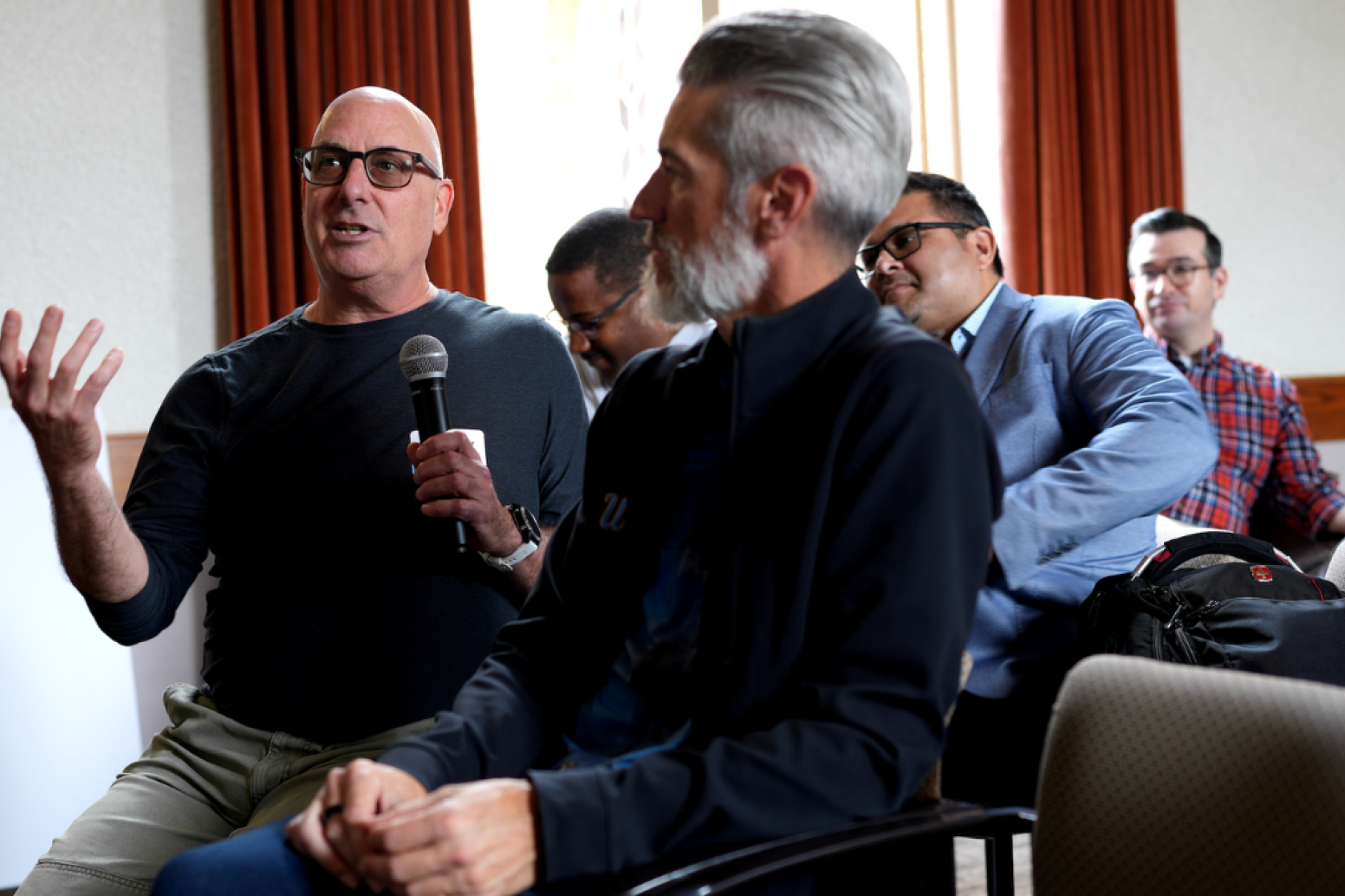
UCLA staff and technologists recently gathered at Royce Hall for the 2025 BruinTech Spring Conference, an energizing day of connection, reflection and shared purpose centered around the theme “Becoming a More Effective Institution,” one of UCLA’s key strategic goals.
From the outset, the event embraced a spirit of unity and shared commitment. BruinTech president Cody Ashe-McNalley, manager, unit information security in Digital & Technology Solutions, opened the day with a welcome to attendees and introduced a video message from Chancellor Julio Frenk, who reinforced the value of collective effort with the reminder that “we all work better when we work together.”
The morning keynote from Lucy Avetisyan, associate vice chancellor and chief information officer, grounded the day in purpose. She spoke to the importance of staying responsive as campus needs shift and technologies evolve, while also reinforcing how individual contributions help advance UCLA’s broader mission.
Referencing the UCLA Digital & Technology Solutions’ Digital Campus Roadmap and strategic priorities, Avetisyan highlighted a vision for a more connected digital environment, supported by campus-wide governance and a collaborative, human-centered approach. “Our greatest asset is our people,” she noted, emphasizing that lasting innovation begins with empowering the individuals who make progress possible.
Kate Miffitt, chief digital experience and engagement officer at the University of California Office of the President, led a theory-based session that invited participants to reflect on how technology can improve, rather than impede, connection and community.
Through small-group discussions, attendees explored how digital tools can be truly transformative when they enhance, rather than replace, human connection. The session reinforced a key insight: learning is inherently social, and meaningful technological advancement happens when growth strengthens relationships and supports collaboration.
That focus on community continued during the Affinity Group Spotlight, which showcased campus-based tech communities working to strengthen collaboration, reimagine instructional support and explore emerging technologies. The spotlight underscored how connection and knowledge-sharing continue to drive innovation across UCLA.
Steve Yu, chief operating officer and chief financial officer of the UCLA South Bay campus, shifted the conversation in the afternoon toward personal development with a session on public speaking. With clarity and practical advice, he offered tools for building confidence and presence, reminding participants that effective communication is a vital skill in every part of campus life, including technology.
Throughout the conference, one message came through clearly: community is the foundation of effectiveness. Whether exploring the potential of new tools, building stronger teams or aligning to strategic goals, the BruinTech Spring Conference showcased how collaboration, innovation and a people-first mindset are driving UCLA forward.
As BruinTech president-elect Stephen Mills, IT manager, UCLA Capital Programs, put it, “Today is a powerful reminder of what’s possible.”
Interested in joining the BruinTech community? Learn more and get involved.
Inaugural Campus Safety Week held
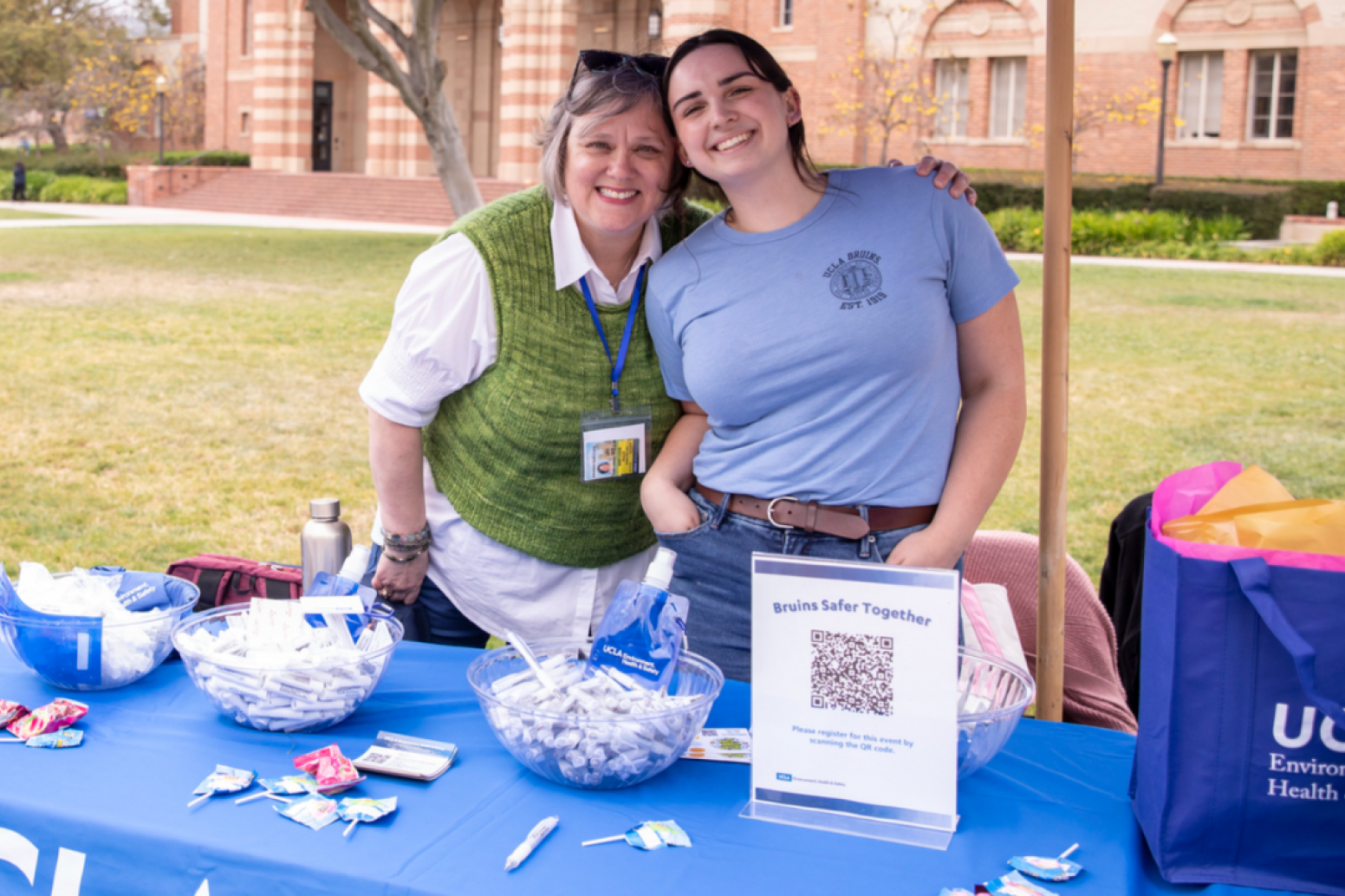
Ensuring safety in our labs and research units, and throughout our campus population, is not just a procedural necessity, it is essential to prevent accidents, protect the health and well-being of our community and maintain the integrity of our scientific endeavors. The consequences of not being prepared and knowledgeable about safety protocols can be severe, including injuries, loss of research and long-term health impacts. To support this education, Environment, Health and Safety hosted UCLA’s inaugural Campus Safety Week.
From May 5 to 7, Bruins were encouraged to attend one or more educational demonstrations, workshops and other events designed to further create a stronger culture of campus safety and well-being. All events were free and open to UCLA students, faculty and staff.
“Safety isn’t merely a box to check; it’s a commitment to our collective well-being,” said Curtis Plotkin, assistant vice chancellor of UCLA Environment, Health and Safety. “By being knowledgeable about safety topics and learning how to prevent accidents and injuries, we actively contribute to a better UCLA.”
Event highlights included DuPont ThermoMan and ThermoHand presentations where attendees learned about the technology and witnessed the dramatic testing of lab coats and protective gloves against intense fire and heat. Emergency prep for the daily driver sessions taught people how to be better prepared behind the wheel and a health and safety fair featured free treats, drawings and prizes. Vendors include Grainger, GOJO/Purell, Dewalt, Thermo Fisher, Bulwark, Rubbermaid, Honeywell, Milwaukee and Primo Driving School, among others.
In addition, a venomous animals and poisonous plants workshop was held for those seeking a refresher course on what to look out for when you’re out in the field or on a hike.
Engaging Bruins for Earth Day at UCLA
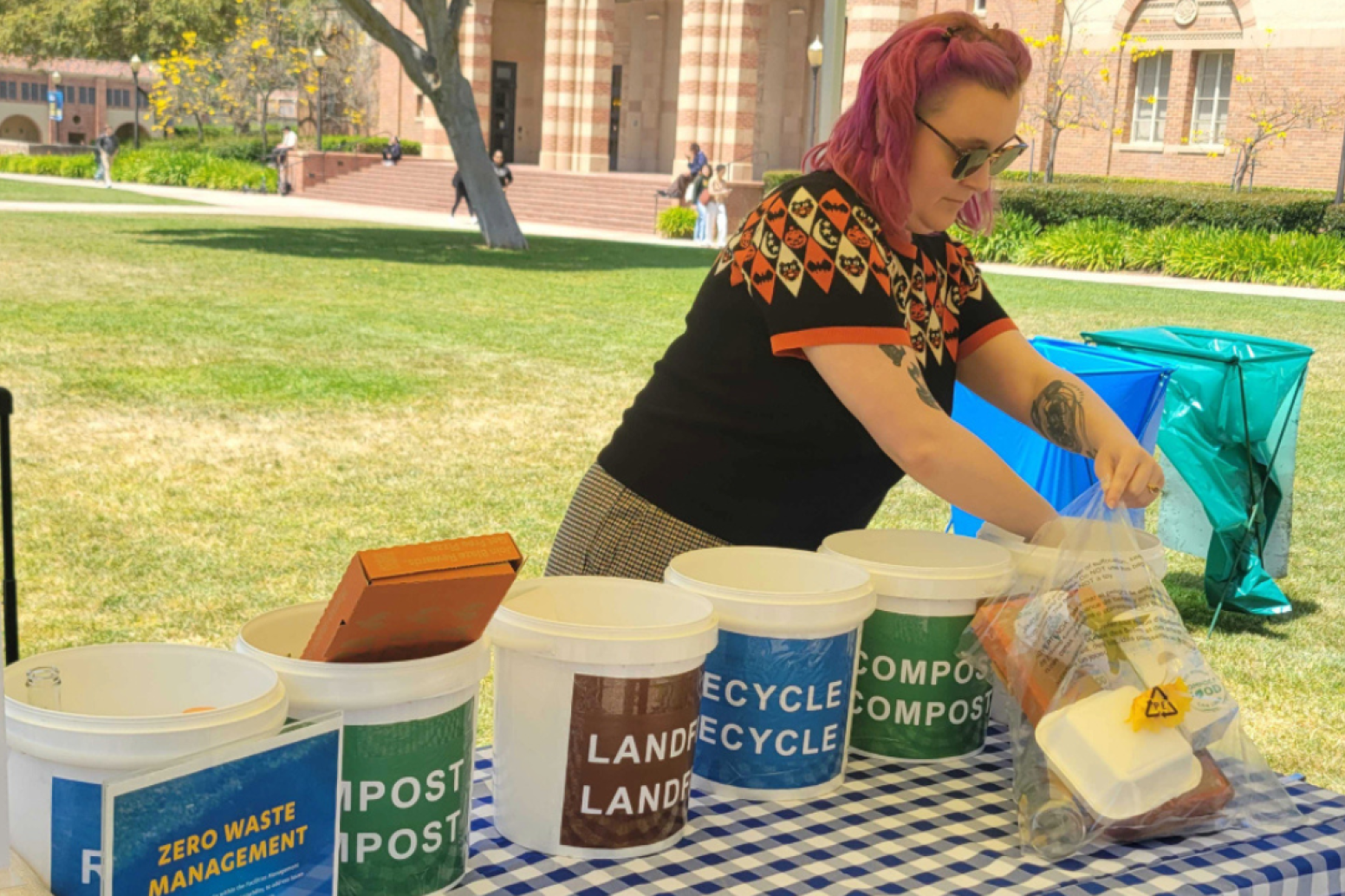
At UCLA, education extends beyond the classroom — it includes fostering sustainable habits among students, faculty, and staff. In celebration of Earth Day this April, the Zero Waste team from Facilities Management hosted an outreach event at Wilson Plaza to promote proper waste sorting and support UCLA’s goal of diverting waste from landfills through recycling and composting.
The Zero Waste team joined other departments from UCLA Administration — including Transportation and the Central Ticket Office — to share practical tips on making environmentally responsible choices. The event featured interactive games that made learning about sustainability fun and rewarding.
One popular activity challenged participants to sort various items into the correct waste bins. Those who demonstrated strong sorting skills received eco-friendly prizes such as reusable bamboo utensil sets, succulents, tumblers, and reusable bags — all designed to encourage sustainable living.
Jade Goegebuer, manager of the Zero Waste program, led the challenge and guided Bruins through the different waste disposal options. Many students expressed appreciation for the hands-on experience, noting that it helped them better understand how to dispose of items responsibly.
“They’re doing great work out here,” said Anthony Ruggeri, a third-year history and public affairs major. “Having this kind of display on campus is amazing. Students come from all over the world and may not be familiar with local recycling practices. Being able to learn this for free — and win prizes — is a fantastic initiative.”