
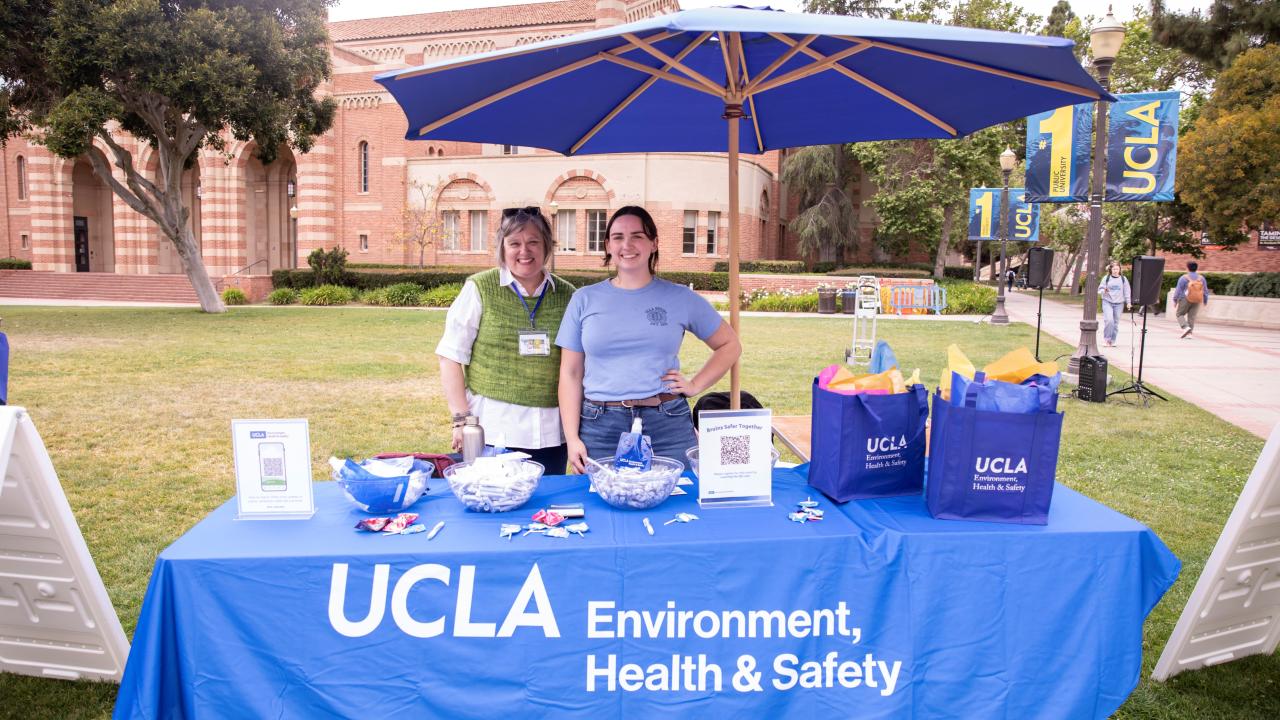
Creating a strong culture of safety is not just about policies, procedures, or compliance; it’s about people. A true culture of safety exists when every employee, at every level, takes ownership of their well-being and the well-being of those around them. As a manager, you play a critical role in shaping that culture through daily actions, priorities, and expectations.
To support this effort, Environment, Health & Safety (EH&S) launched a new Safety Orientation training course for all employees. This training is designed to establish a shared foundation of safety awareness and reinforce the message that safety is a collective responsibility. Safety is relevant across all work environments, including office-based and administrative functions. While hazards differ by department, every work setting has potential risks and opportunities to prevent injuries and promote well-being.
Managers help bring these concepts to life. Encouraging timely completion, reinforcing key takeaways, and integrating safety into everyday conversations will make the training more meaningful and impactful.
Key Safety Topics to Reinforce with Your Team
1. Recognize Hazards and Risks/Conduct Risk Assessments
Manager Tip: Help employees connect general safety concepts to your specific work environment.
Suggested Discussion Questions:
- What hazards do we encounter in our work area?
- What are your ergonomic, trip hazards or workspace concerns?
- Which tasks have the highest potential risk?
- What should employees do if they identify a new hazard or concern?
2. Prevent Injuries and Illnesses
Manager Tip: Discuss examples and trends that are relevant to your department and day-to-day operations.
Suggested Discussion Questions:
- What are our most common injury trends or near-miss concerns?
- What safe work practices are expected within our team?
3. Prepare and Respond to Emergencies
Manager Tip: Make emergency preparedness specific to your location and operations. Print and maintain a copy of your department’s Emergency Action Plan in a binder that is easily accessible to all employees.
Suggested Discussion Questions:
- Where are our evacuation routes and assembly locations?
- What emergency scenarios are most likely to impact our work area?
- What is the Emergency Action Plan (EAP) for the department?
4. Locate Safety Resources
Manager Tip: Ensure employees know where to go when they need assistance or have questions.
Suggested Discussion Questions:
- Who should employees contact with particular safety concerns?
- Where can employees find procedures and safety resources?
- How can hazards, concerns, or incidents be reported?
Connecting Your Team to Safety Resources
Managers don’t have to do this work alone. UCLA offers a range of resources to support a safe work environment:
- Environment, Health and Safety (EH&S) – Training, guidance, and workplace safety support
- Insurance & Risk Management (IRM) – Ergonomics and injury prevention, and driving safety resources
- Office of Campus and Community Safety – UCLA – UCLA Police Department (UCPD), Office of Emergency Management (OEM)
- Behavioral Intervention Team (BIT) – A multidisciplinary team consisting of representatives from Campus Counsel, Staff & Faculty Counseling, Insurance & Risk Management, UCLA Police Department and Employee & Labor Relations.
Practical Actions You Can Take Today
Building a culture of safety doesn’t require large-scale changes. Small, consistent actions can create meaningful impact over time.
- Start meetings with a brief “Safety Moment.” Share a tip, observation or scenario to keep safety top of mind.
- Encourage completion of the Safety Orientation and discuss key takeaways during team meetings or one-on-one conversations.
- Model safe behaviors. Your actions set the standard and establish expectations for your team.
- Create a psychologically safe environment. Employees will feel more comfortable asking questions and raising concerns.
- Leverage campus partners. EH&S and other UCLA resources are available to support your efforts.
Safety culture isn’t built in 40 minutes, but it’s built through everyday conversations, actions and shared responsibility. By connecting safety training to the work your team performs each day, you help move safety from a requirement to a value embedded in the way we work. Bruins are safer together!
Interested in reviewing prior months’ topics? Visit our Monthly Management Tips website.
Do you have feedback, questions or a suggested topic you would like to learn more about? Please email: managementtips@ucla.edu.
Want to receive Monthly Management Tips emails? Sign up for our list!